
MASONRY & CONCRETE - BERGEN, PASSAIC, ESSEX, MORRIS & UNION COUNTIES

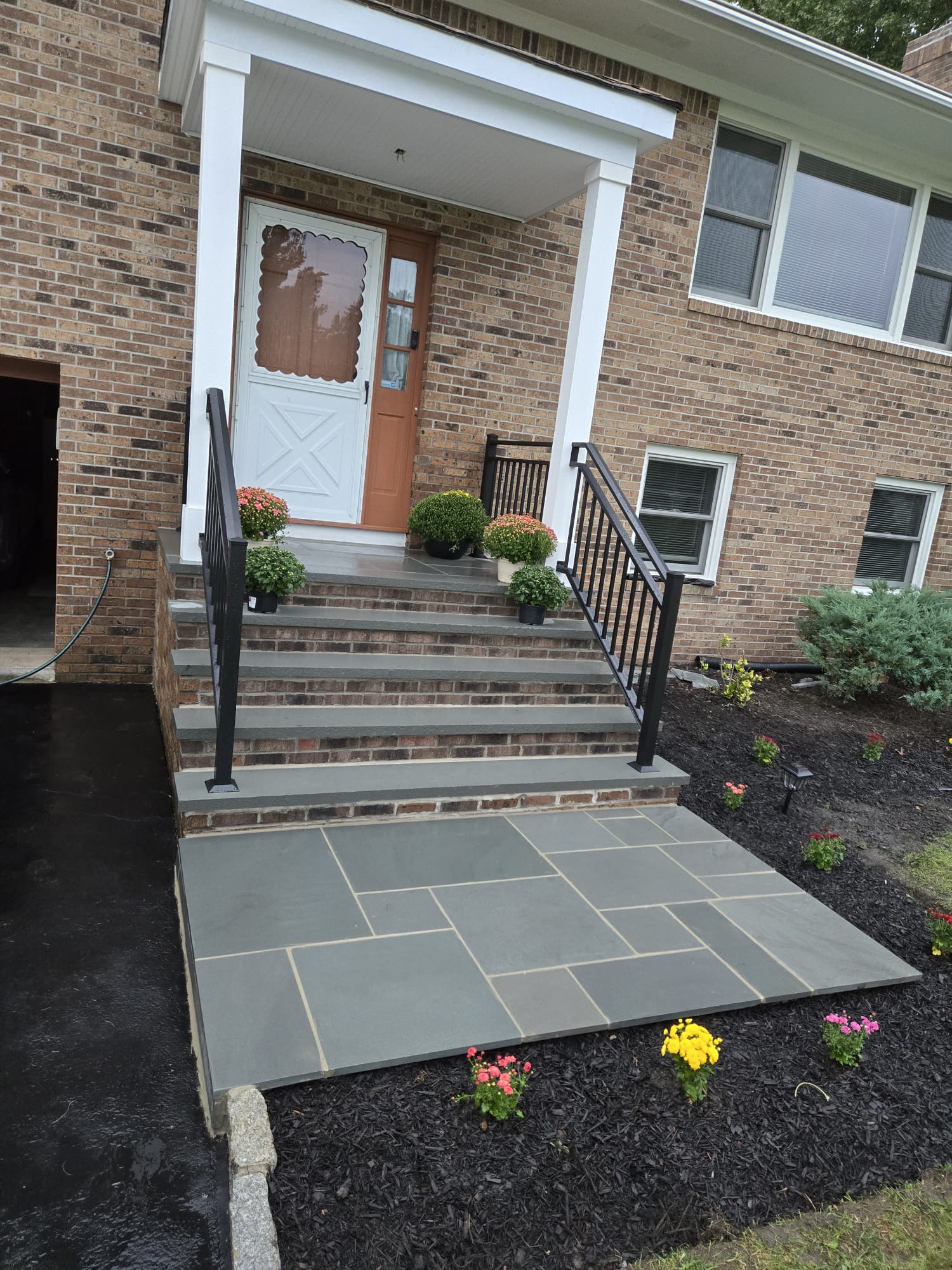
Brick home entry with white porch columns, a white storm door and black railings

Masonry steps in North Jersey, built to survive the winters

Entry steps work hard in this part of New Jersey. Deicing salt, repeated freeze-thaw cycles and daily use wear down mortar and masonry long before the damage is obvious. Eagle 1 Construction repairs and rebuilds brick, stone and concrete steps for homes across Bergen, Passaic, Essex, Morris and Union counties. Below are real projects, then how we decide between repair and rebuild, which material suits which house, and what New Jersey code expects.

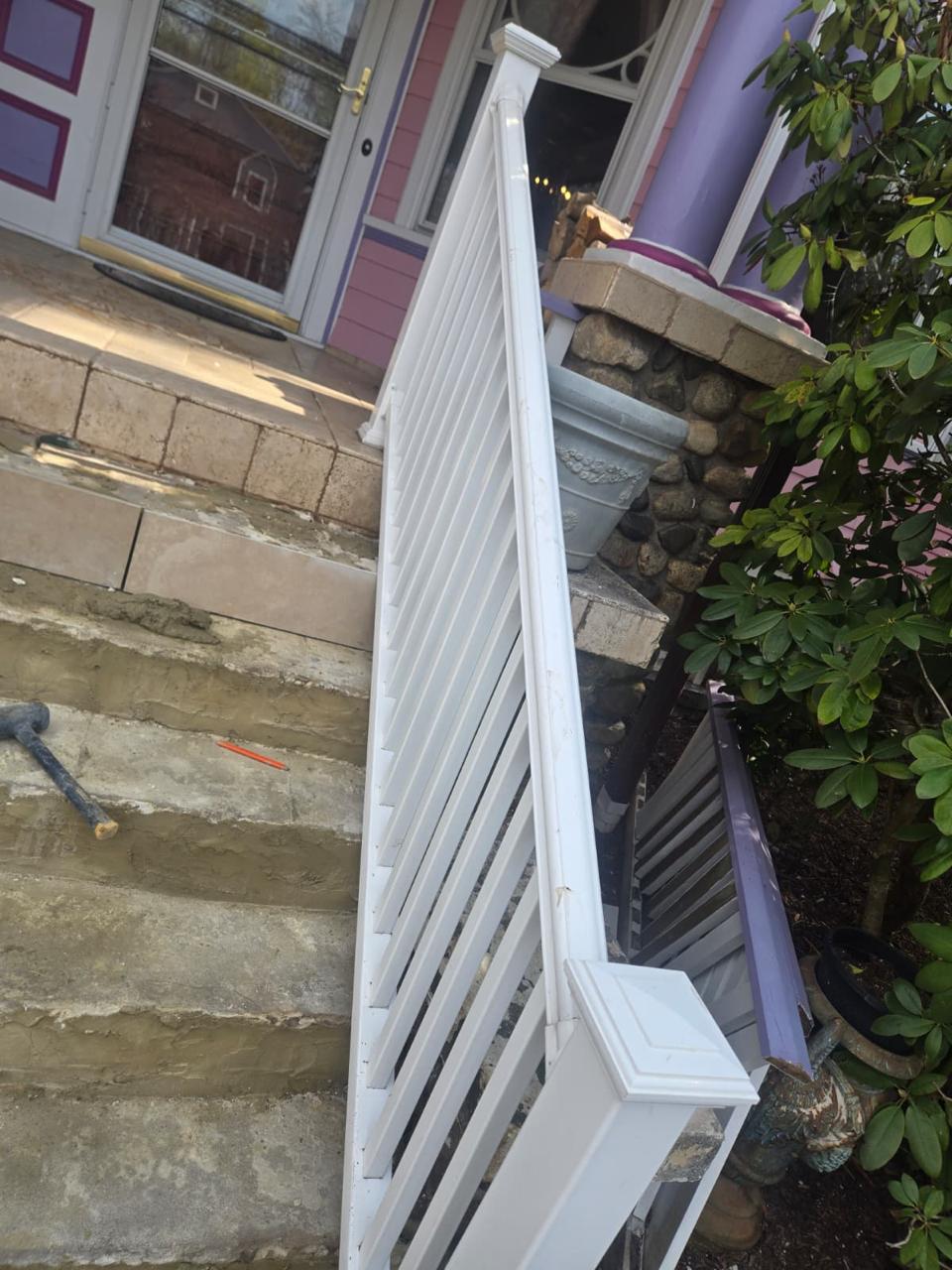
Worn masonry entry steps with a white railing in Paterson, NJ, before repairBEFORE
Paterson, Passaic County - before

No matter how worn the steps look, there is a right fix

These Paterson steps are the kind of job homeowners put off calling about: weathered masonry, worn surfaces, a railing running alongside. Steps in this condition can usually be repaired or replaced, and the first step is simply finding out which. We look at the footing, the masonry and the way water moves around the stairs, then tell you plainly whether a repair will hold or a rebuild makes more sense.

Request an assessment

Recent masonry step projects

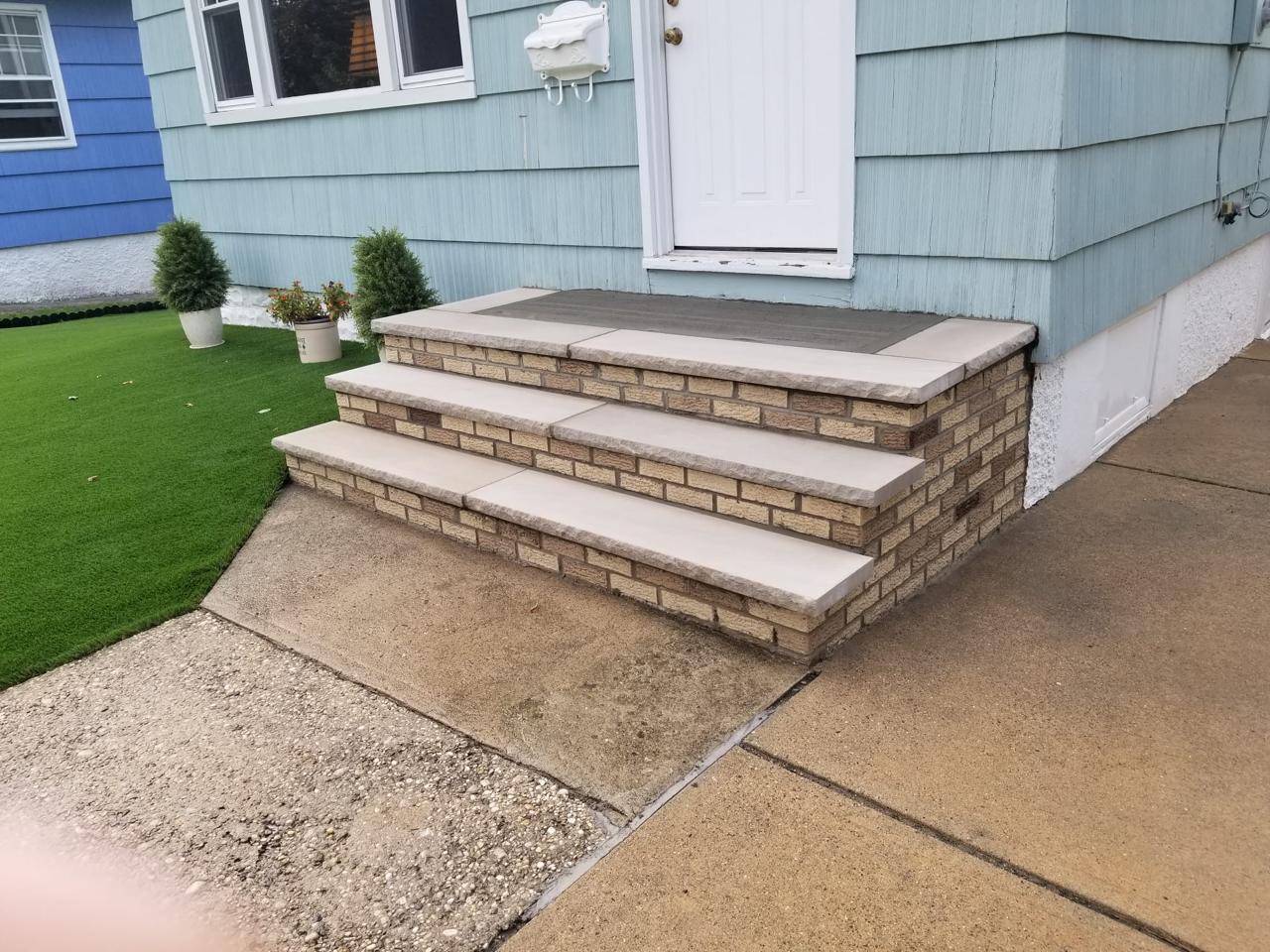
Rebuilt brick-veneer front steps in Lyndhurst, NJ
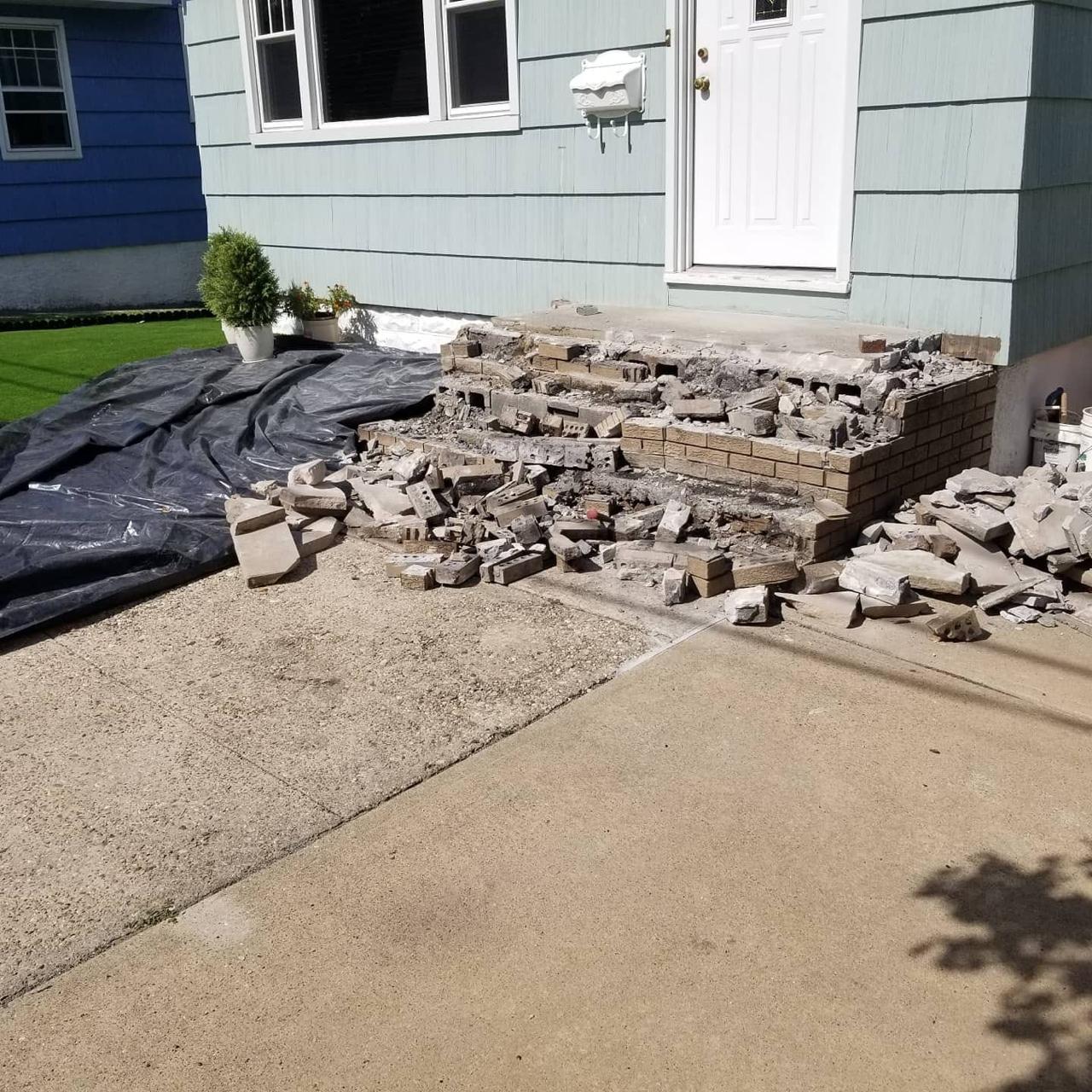
Lyndhurst, NJ front entry steps before the masonry rebuild
BEFOREAFTER

Bergen County - Lyndhurst

Brick-veneer front steps rebuilt after pulling away from the house

LocationLyndhurst, Bergen CountyMaterialBrick veneerWorkFull rebuild

The situation

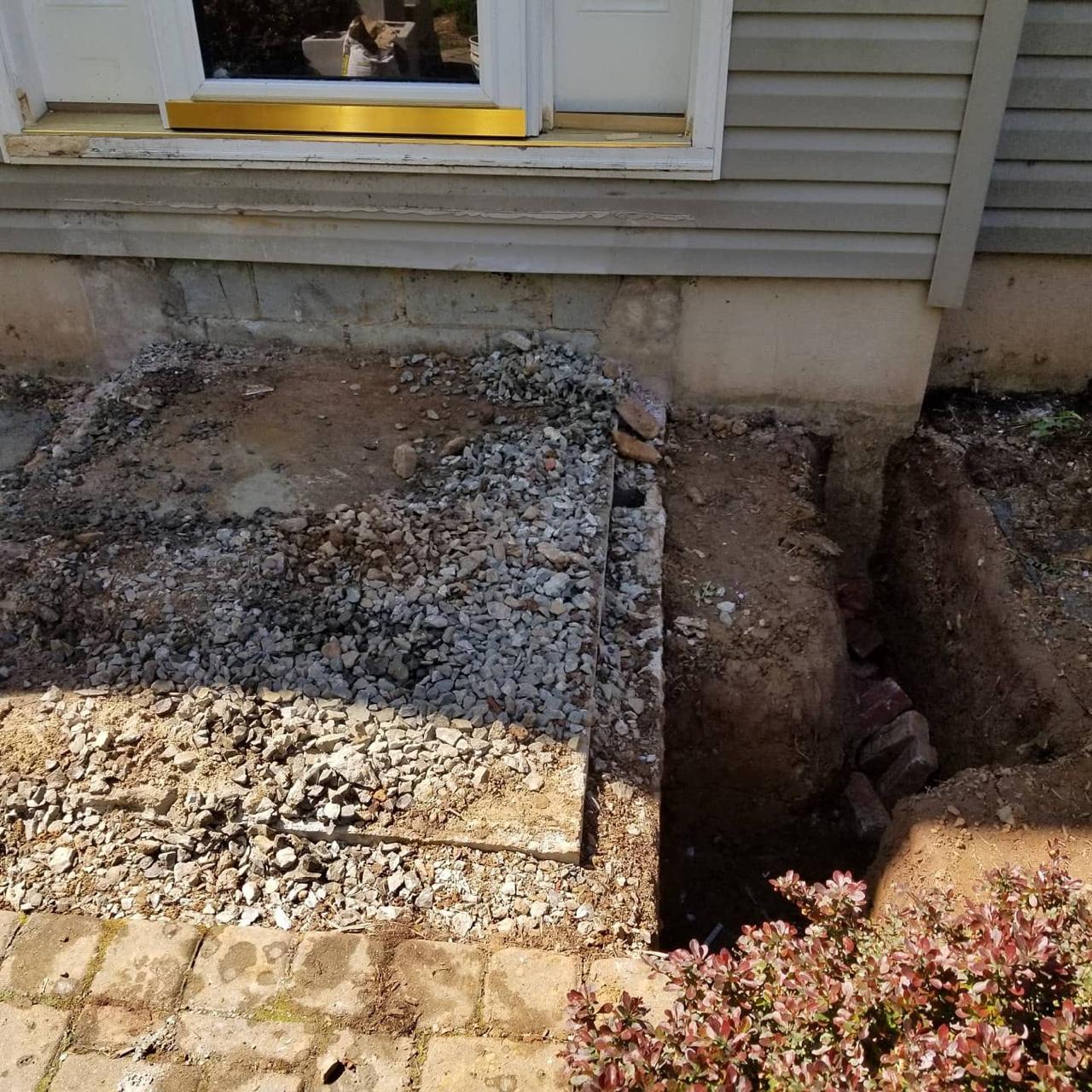
The original steps had separated from the house and cracked at the base. When steps and foundation move independently, a gap opens, water gets in behind the steps, and freezing widens it every winter. A surface patch cannot close that gap, so these were rebuilt and finished in brick veneer.

When this fix makes sense

  • A visible gap between the top step and the house wall
  • Treads that slope toward the door or have dropped on one side
  • Cracks at the base that reopen after patching

Why this material, and what else we'd consider

Brick veneer (chosen)matches the brick and siding common on Bergen County homes, and individual bricks and joints can be repaired later.

Coated concretecheapest to redo, but coatings tend to peel and hide new cracks.

Natural stonebeautiful, but heavier and costlier; worth it when the rest of the entry is stone.
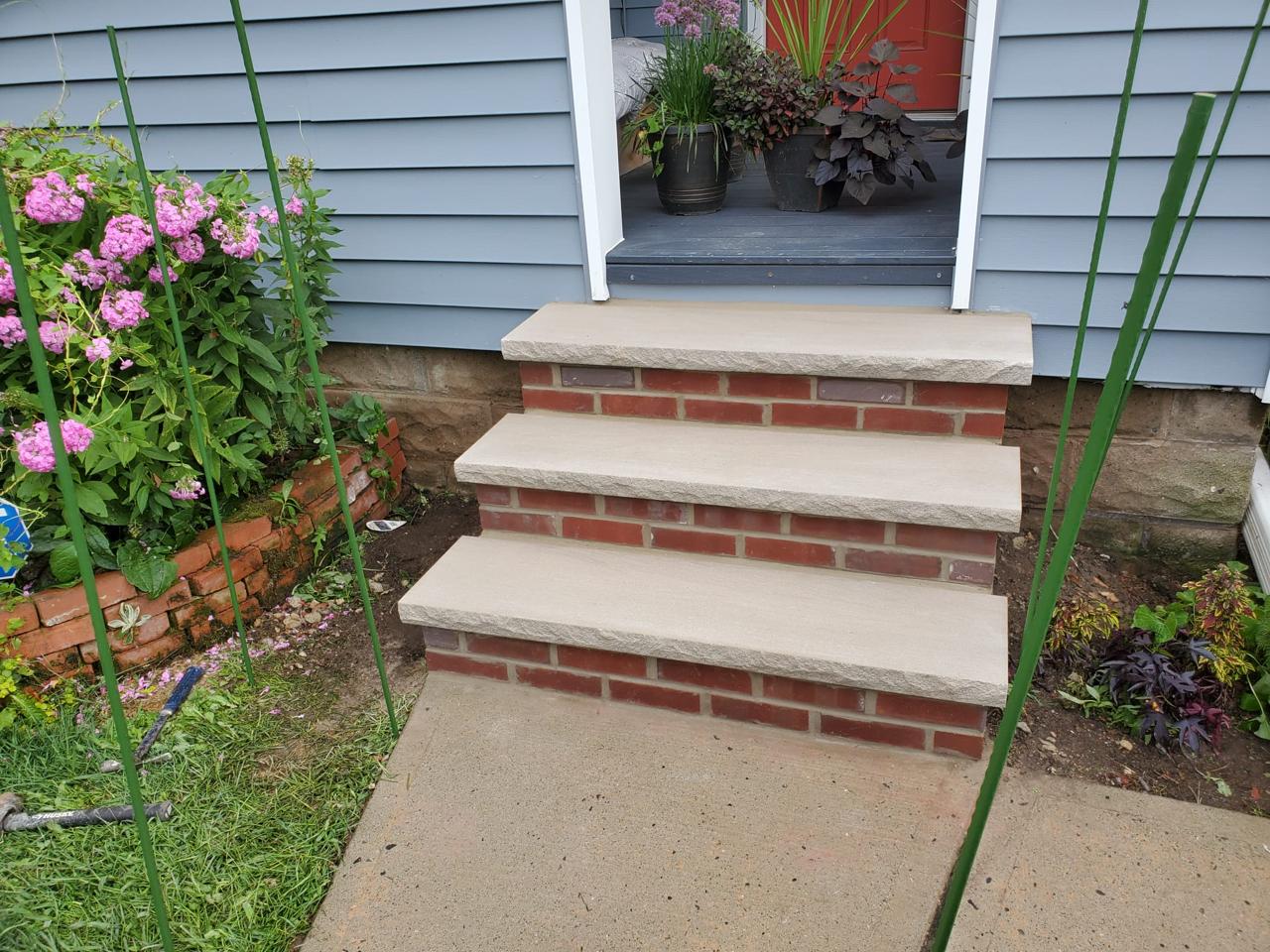
Replaced masonry front entry steps in Morris Plains, NJ
AFTERMorris Plains, Morris County

Morris County - Morris Plains

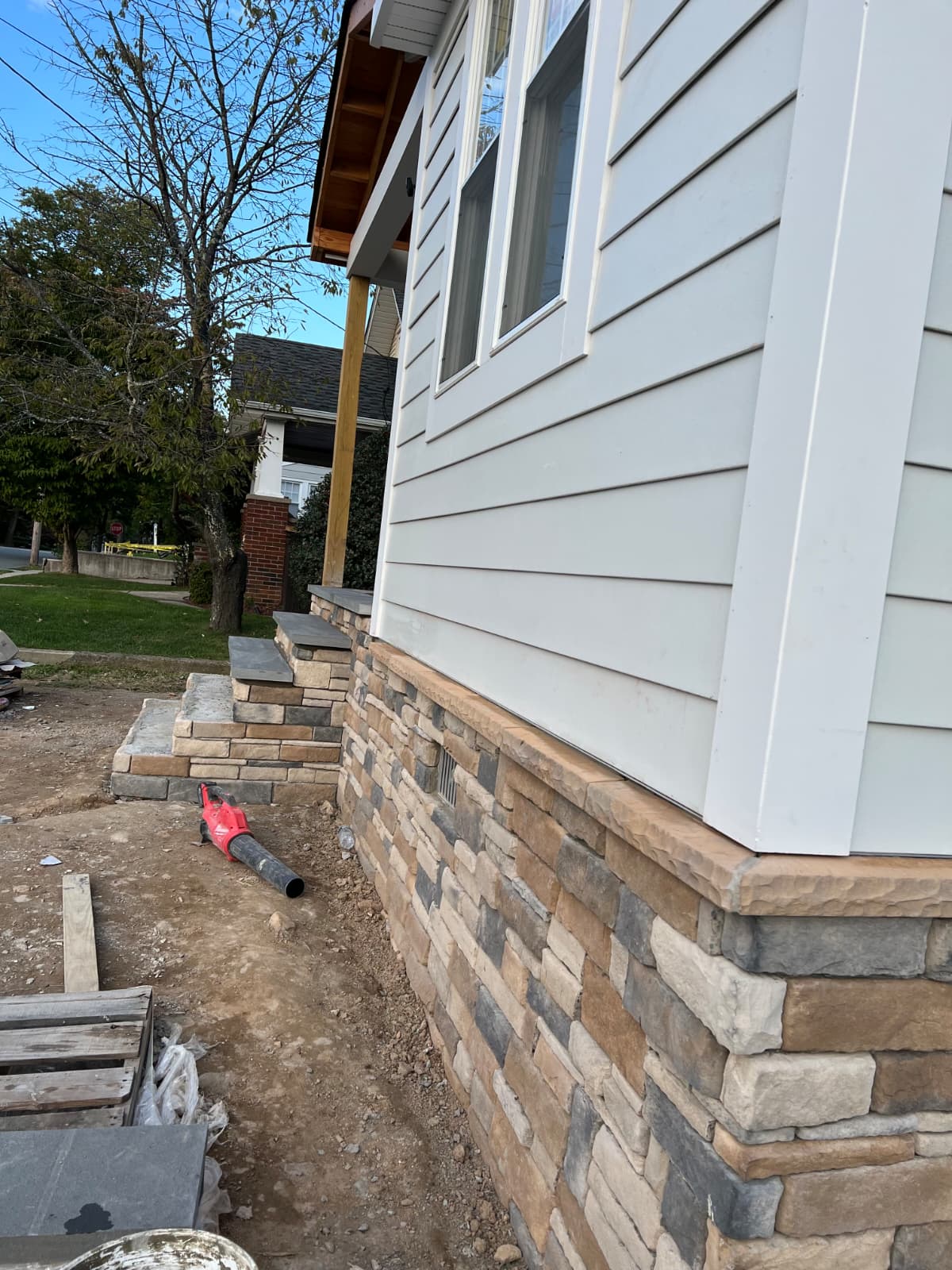
Front entry masonry steps replaced

LocationMorris Plains, Morris CountyMaterialMasonryWorkFull replacement

The situation

A completed front-entry replacement in Morris Plains. Replacement, rather than repair, is the right call when steps are past patching: cracked across several treads, loose, or no longer level.

When this fix makes sense

  • Cracks running across more than one tread
  • Treads that rock or sound hollow when tapped
  • Surface flaking (spalling) after salt exposure

Why this material, and what else we'd consider

Full replacement (chosen)costs more up front, but the structure underneath is new, so the problem does not return.

Patchingfine for a single hairline crack, but it will not hold on steps that are moving.

Resurfacing overlaya thin coating over damaged steps tends to lift and peel.

Tan brick-veneer entry steps in Montclair, NJ
Montclair, NJ entry steps before the brick-veneer rebuild
BEFOREAFTER
Picture-frame brick tread pattern on new steps in Montclair, NJ
Picture-frame tread detail

Essex County - Montclair

Tan brick-veneer steps with a picture-frame tread finish

LocationMontclair, Essex CountyMaterialBrick veneerWorkRebuild and design upgrade

The situation

These steps were rebuilt in tan brick veneer with the treads laid in a picture-frame pattern: a brick border framing the field of each tread. It is a design detail rather than a structural necessity, and it makes the entry look deliberate instead of merely repaired.

When this fix makes sense

  • You are replacing the steps anyway and want the entry to match the home's character
  • Plain poured treads look out of place next to the brickwork
  • The entry is the first thing visitors see and you want it to hold up to close looks

Why this material, and what else we'd consider

Brick veneer with a brick border (chosen)echoes the house and hides wear better than a plain surface.

Bluestonemore formal and higher cost, and it needs periodic sealing.

Plain concrete treadslowest cost, but nothing to disguise wear.

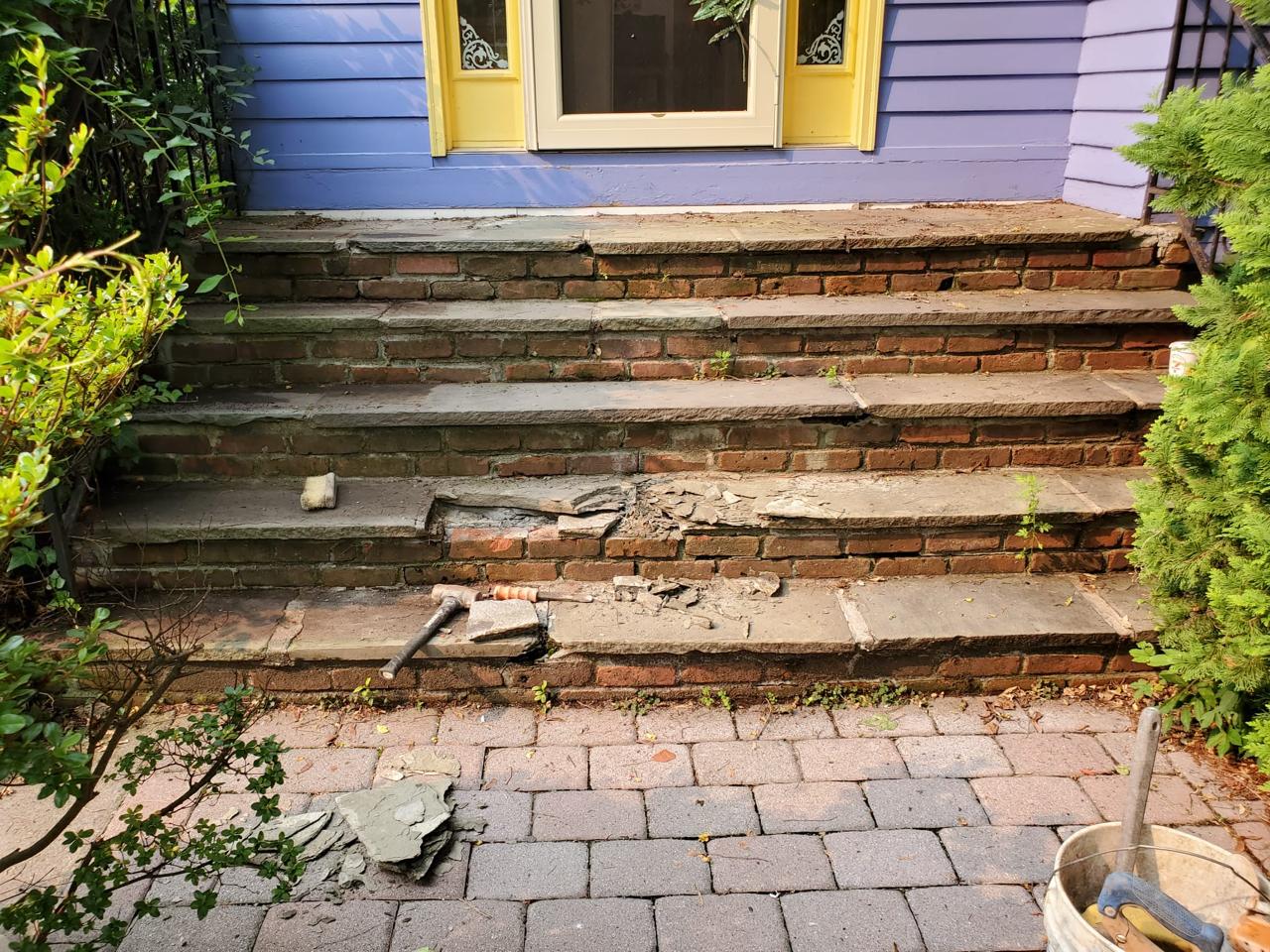
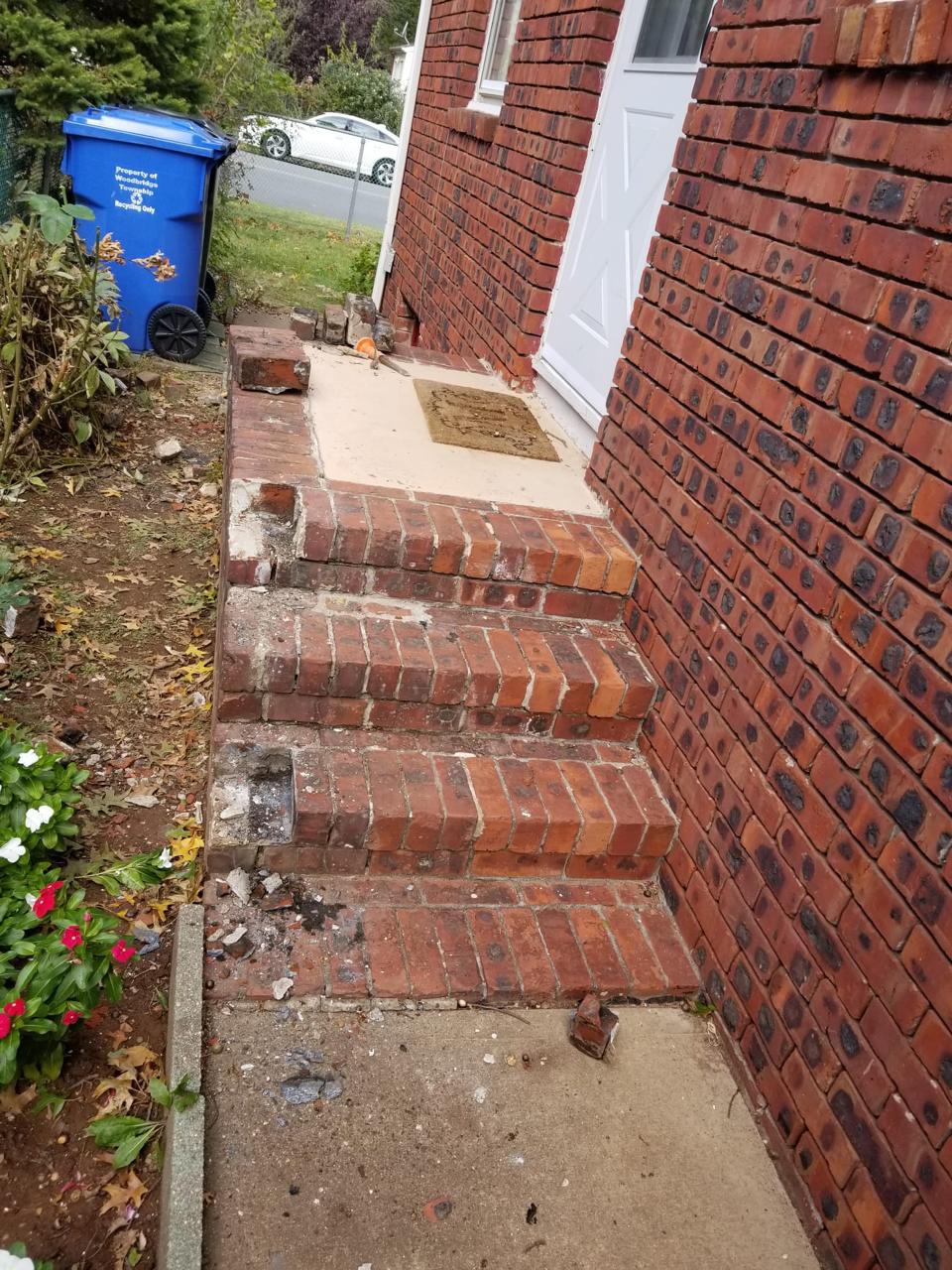
Rebuilt brick-faced steps in Union Township, NJ
Union Township, NJ brick-faced steps before the rebuild
BEFOREAFTER

Union County - Union Township

Brick-faced steps rebuilt where the old facing was breaking down

LocationUnion Township, Union CountyMaterialBrick veneerWorkFull rebuild

The situation

The old brick facing on these steps was cracked and no longer holding together. When the facing fails, the first question is whether the structure behind it is still sound. Here it was not worth building new brick over old problems, so the steps were rebuilt and faced again.

When this fix makes sense

  • Bricks that rock or sound hollow
  • Mortar joints that are open or crumbling
  • White powder (efflorescence) or flaking brick faces

Why this material, and what else we'd consider

Rebuild with new veneer (chosen)right when the base or core is moving; new brick on a moving base fails again.

Repointingright when the bricks are sound and only the joints have eroded; a much smaller job.

Re-facing over the old surfaceadds thickness and hides problems rather than solving them.

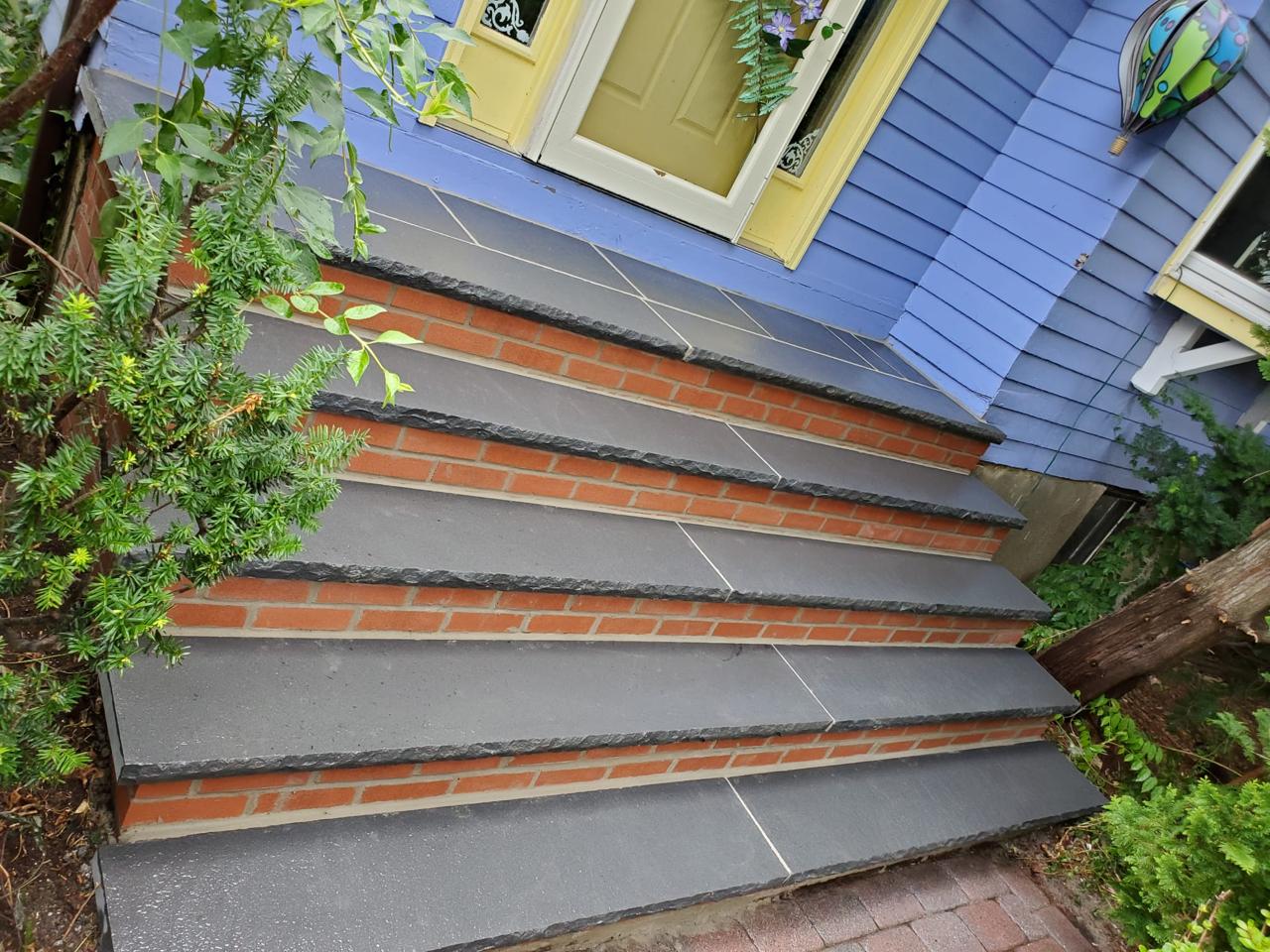
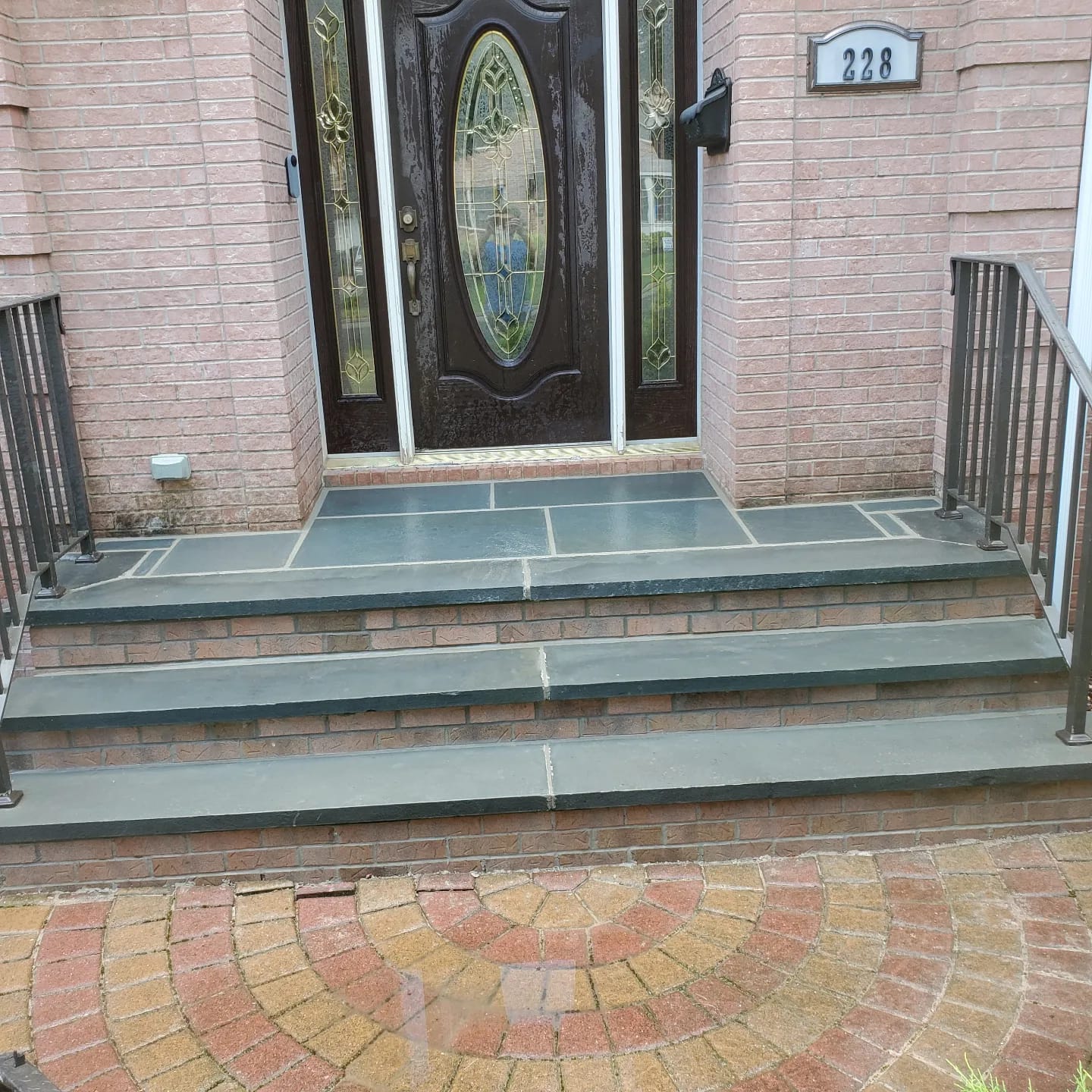
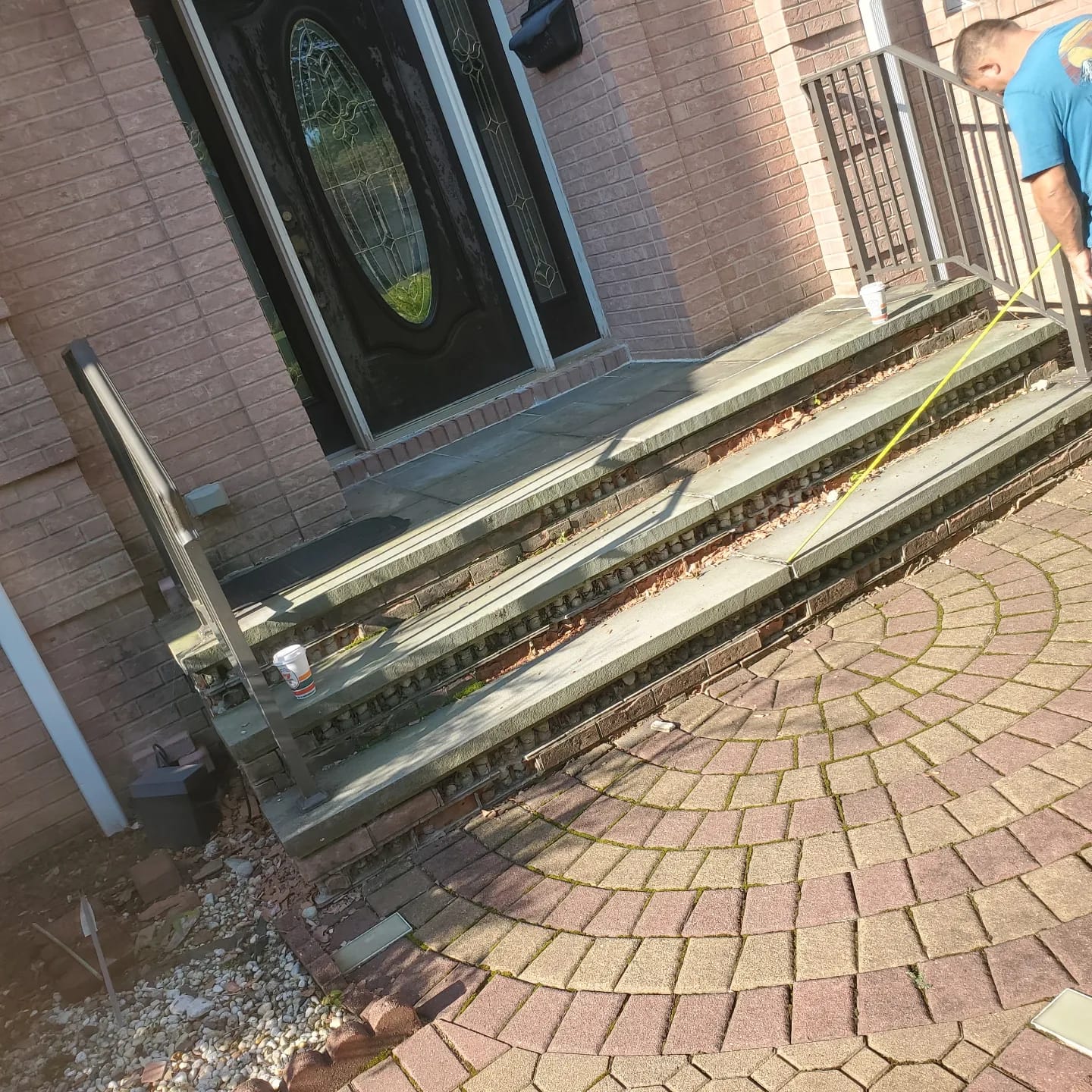
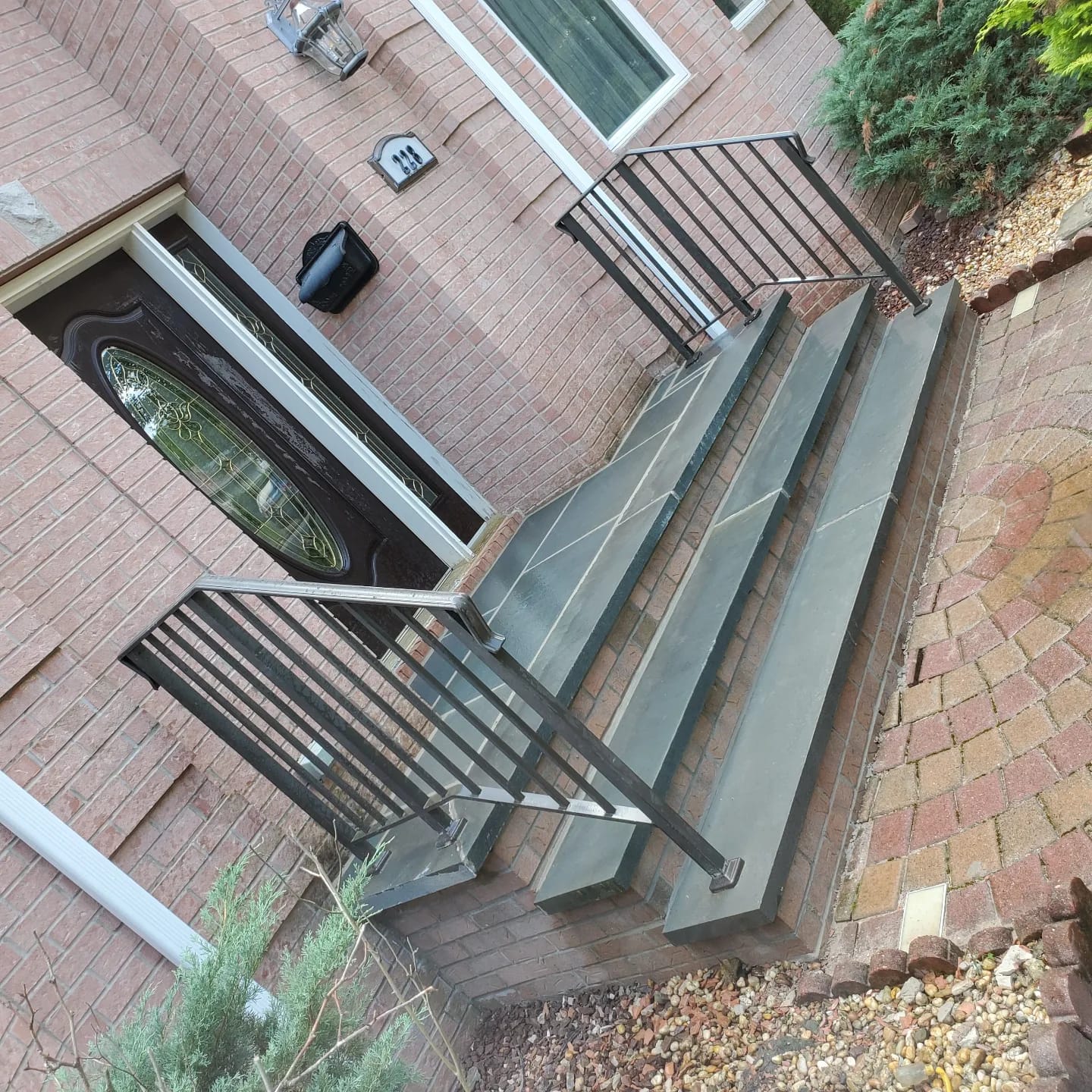
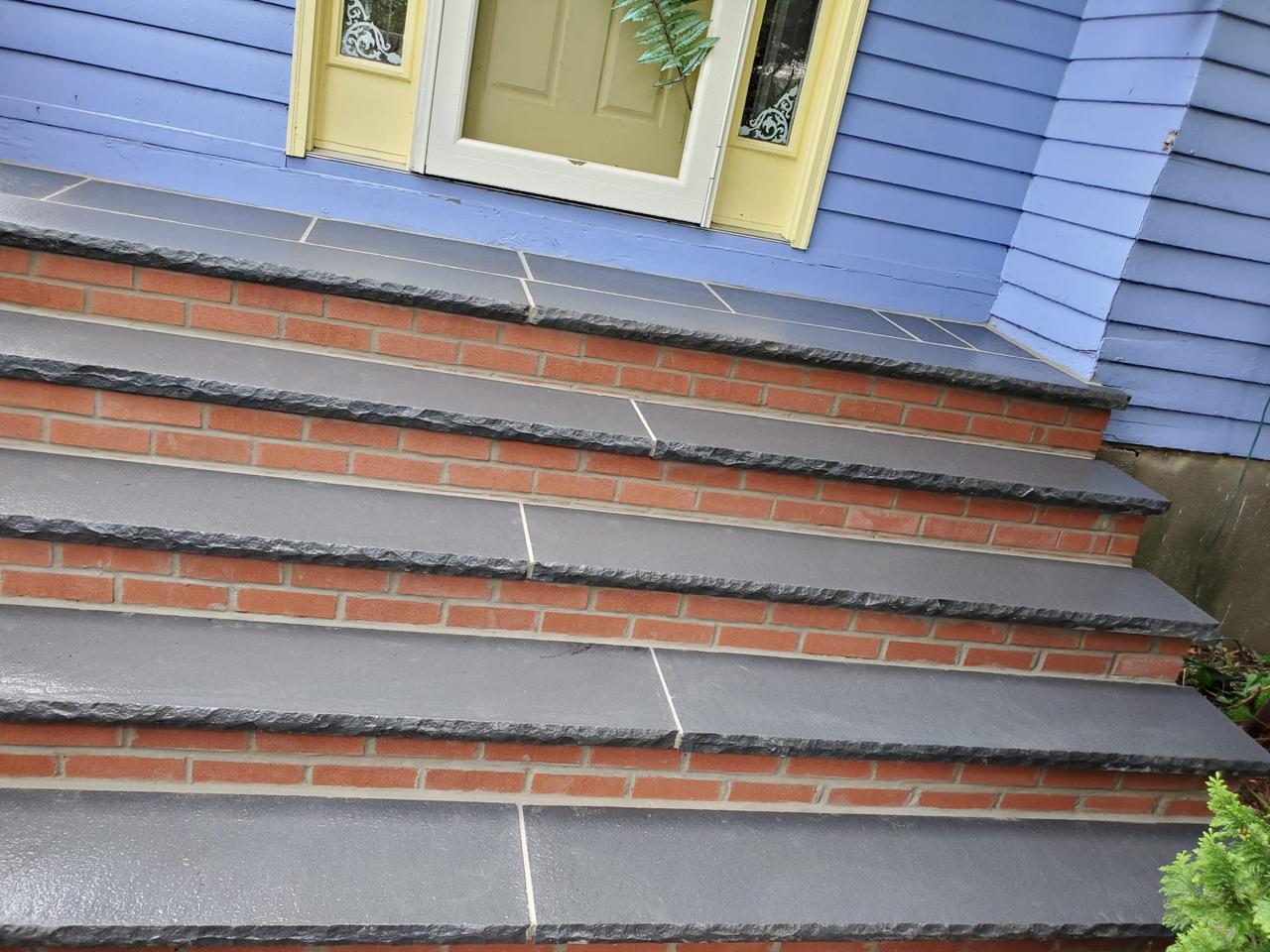
Paramus, NJ bluestone treads on brick risers with black wrought-iron railing
Paramus, NJ bluestone entry steps with deteriorated brick risers before the rebuild
BEFOREAFTER
Black wrought-iron railing at the rebuilt entry steps in Paramus, NJ
Railing detail

Bergen County - Paramus

Bluestone steps with wrought-iron railing, rebuilt

LocationParamus, Bergen CountyMaterialBluestone and brickWorkRebuild with railing

The situation

The before photo shows bluestone treads sitting on brick risers whose joints had gapped and broken down. The steps were rebuilt with bluestone treads on brick-faced risers and finished with a black wrought-iron railing.

When this fix makes sense

  • Brick risers with open, missing or crumbling mortar
  • Bluestone treads that rock, tilt or have cracked
  • Water staining or pooling along the step edges

Why this material, and what else we'd consider

Bluestone (chosen)natural non-slip texture and a long service life, but it needs periodic sealing and costs more than concrete.

Graniteharder and more expensive, with a more modern look.

Porcelain paverslow maintenance, but a less traditional look.

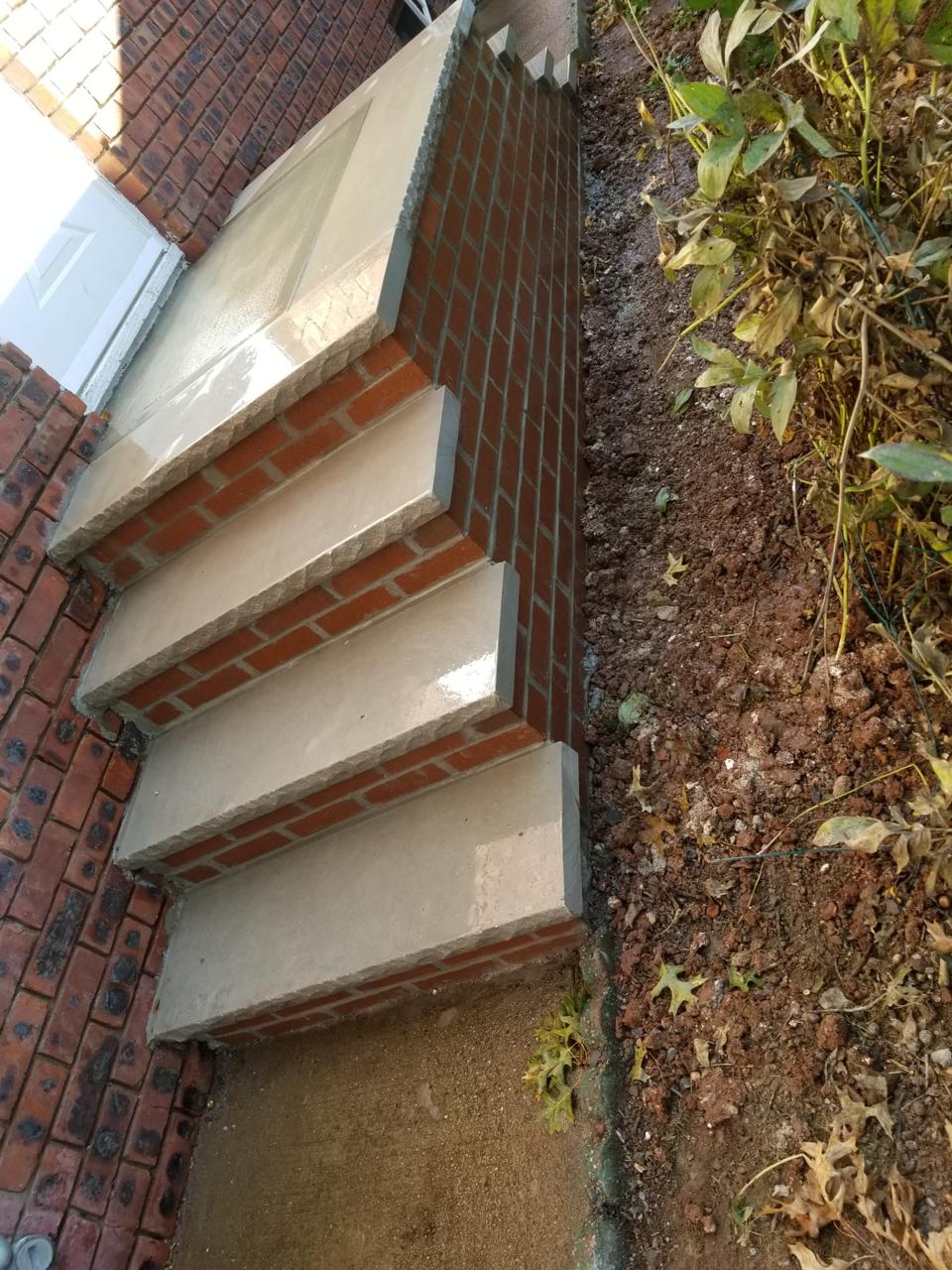
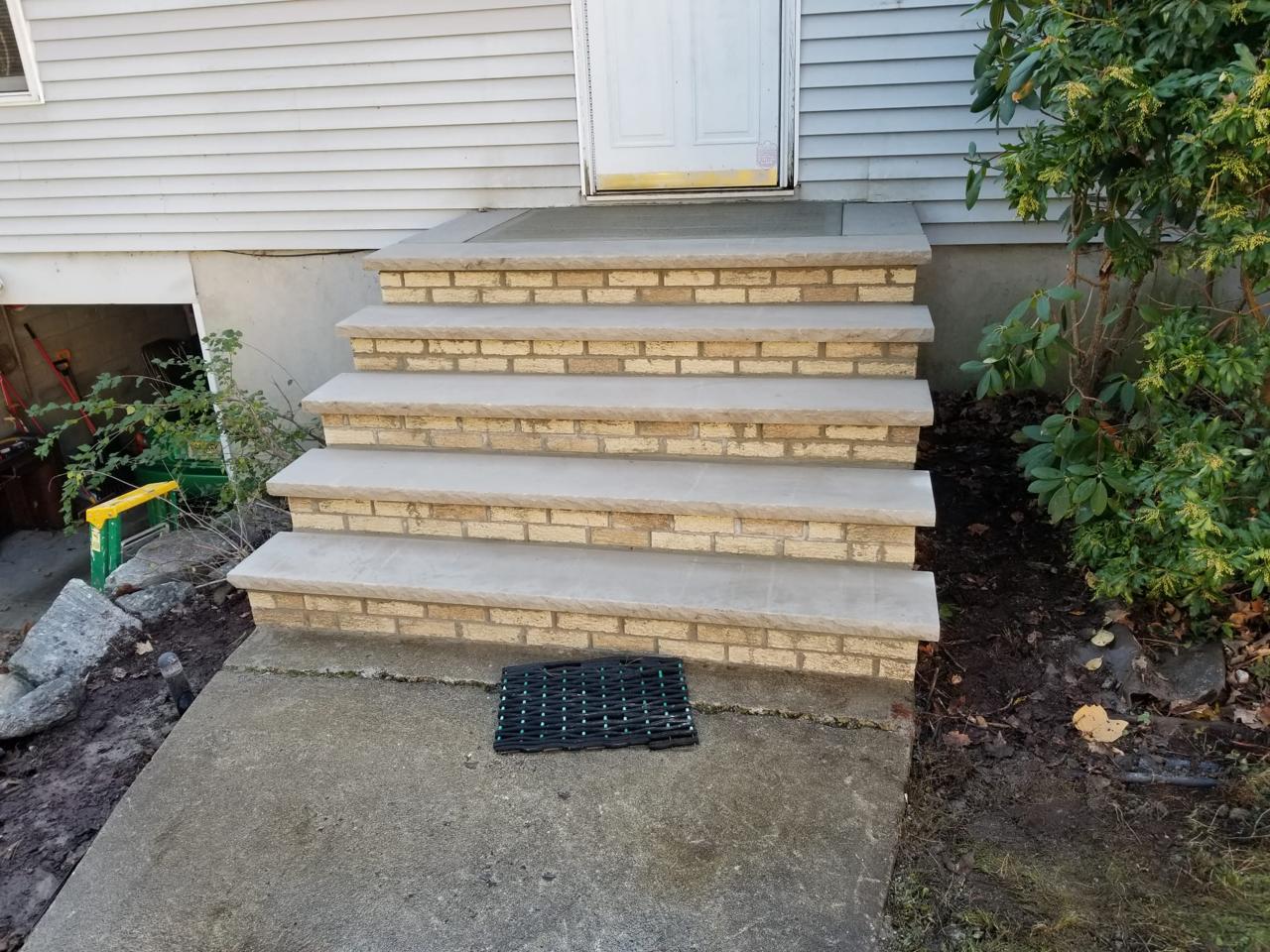
Tan brick-veneer steps with poured-concrete treads in Rutherford, NJ
Rutherford, NJ entry steps before the rebuild
BEFOREAFTER

Bergen County - Rutherford

Tan brick-veneer steps with poured-concrete treads

LocationRutherford, Bergen CountyMaterialBrick veneer and concreteWorkFull rebuild

The situation

These steps pair warm tan brick-veneer risers with clean poured-concrete treads. Mixing materials this way puts the durable surface where the foot traffic and weather hit hardest, and keeps the brick where it is seen.

When this fix makes sense

  • You want brick character without paying for brick or stone on every surface
  • The treads take the most foot traffic and weather
  • You want fewer joints for water to find

Why this material, and what else we'd consider

Concrete treads with brick risers (chosen)fewer joints on the surface that gets the most wear.

Brick treadsthe most traditional, but more joints to maintain.

Stone treadspremium look and cost, best when the rest of the entry is stone.
Repair or rebuild? How we decide

The deciding factor is almost always what is underneath: if the footing has moved, surface repairs will not hold.

Hairline cracks, steps still level and solidRepair (patch or repoint)
Loose or hollow bricks, open joints, steps still levelRepoint or re-face
Steps sinking, tilting or pulling away from the house, cracks that reopenRebuild from the footing up

How we build steps that last

Footing below the frost line

In North Jersey the frost depth under the building code is generally 36 inches, so footings go below that on a compacted base. Steps on shallow footings heave and settle every winter.

Reinforcement and separation

Steel rebar ties the footing, walls and treads into one structure. An isolation joint lets the steps and the house move independently, so neither cracks the other.

Mortar and joints

Type S mortar for exterior steps (ASTM C270, minimum 1,800 psi compressive strength), with joints tooled to shed water.

Drainage

Treads are pitched slightly forward so water leaves the step instead of sitting on it.

Which material fits your home?

Brick veneerBest for: brick and period homes, repairable over timeWatch for: joints need occasional repointing
Bluestone / natural stoneBest for: formal, long-lasting entriesWatch for: higher cost, periodic sealing
Poured concreteBest for: simple, budget-conscious rebuildsWatch for: plain finish, surface wear from salt

New Jersey code and permits

Under the New Jersey Uniform Construction Code (N.J.A.C. 5:23), residential stairs follow these limits: maximum riser height 7 3/4 inches, minimum tread depth 10 inches, and no more than 3/8 inch variation between risers in a flight. Stairs with four or more risers need a handrail between 34 and 38 inches high. Whether a permit is required depends on your town and on whether the work is a repair or new construction, so confirm with your municipal building department. We will tell you what applies before work begins.

Where we build steps

Bergen County: Lyndhurst, Paramus, Rutherford. Essex County: Montclair. Morris County: Morris Plains. Passaic County: Paterson. Union County: Union Township. ...and nearby North Jersey towns.

Masonry steps: common questions

Do I need a permit for masonry steps in North Jersey?

Often yes for new or structural step work, but it depends on your town and on whether the job is a repair or a replacement. Your municipal building department makes the call.

How deep should the footing be?

Below the frost line, which is 36 inches in most of North Jersey, on compacted, undisturbed base.

Can masonry steps be built or repaired in winter?

Often yes with precautions. Mortar should not be mixed or placed below about 40 degrees F without cold-weather protection such as heated materials and covers. Hard-freeze weeks are usually postponed.

How long do masonry steps last?

Built on a proper footing and repointed or sealed as needed, brick and stone steps commonly last decades. Poor drainage and deicing salt are what shorten that.

Is rock salt safe for masonry steps?

It is hard on them, especially new ones. Use sand for traction, and avoid salt on new masonry in its first winter.

How long will my project take?

It depends on size, material and weather. You get a schedule with your estimate.

Planning your masonry steps?

Send us a photo, your town and a rough idea of the size and we will tell you what we would do.

Request an estimate